 info@mupanatours.com Blog
 +255714055829
DISCOVER SAMBURU NATIONAL RESERVE
Encounter enormous elephant herds, ancient baobab trees, including other animal species and spectacular seasonal landscapes. Explore the park’s open savannahs, woodlands and seasonal wetlands, where animals and hundreds of bird species thrive.
SAMBURU NATIONAL RESERVE!
THE BEST OF SAMBURU NATIONAL RESERVE
SAMBURU NATIONAL RESERVE
The park is located in Northern Kenya, along the banks of the Ewaso Ng’iro River, in Samburu County. It lies approximately 350 km north of Nairobi and forms part of the larger Samburu–Laikipia ecosystem. Samburu National Reserve covers approximately 165 km², equivalent to about 16,500 hectares (165 million square metres).
The reserve sits in a semi-arid landscape, characterized by open grasslands, dry bushland, acacia woodland, doum palms and rocky hills. The Ewaso Ng’iro River is particularly important because it provides a permanent water source in an otherwise dry environment, attracting elephants, giraffes, buffaloes, predators and numerous bird species. Samburu is situated on the northern side of the Laikipia Plateau, with Buffalo Springs National Reserve lying directly across the Ewaso Ng’iro River. Together, these protected areas form an important wildlife landscape in northern Kenya.
The reserve was established in 1985 as a protected wildlife area. Conservation in the region developed as Kenya sought to protect important wildlife habitats while maintaining the ecological connections between northern Kenya’s different landscapes. The reserve takes its name from the Samburu people, an Indigenous pastoralist community whose traditional homeland extends across this part of northern Kenya. The Samburu have traditionally practiced livestock keeping, particularly cattle, goats and sheep, and their cultural traditions remain an important part of the region’s identity.
Over time, Samburu became internationally recognized for its distinctive wildlife, particularly species adapted to the dry northern environment. It is famous for the “Samburu Special Five”:
- Gerenuk
- Beisa oryx
- Grevy’s zebra
- Somali ostrich
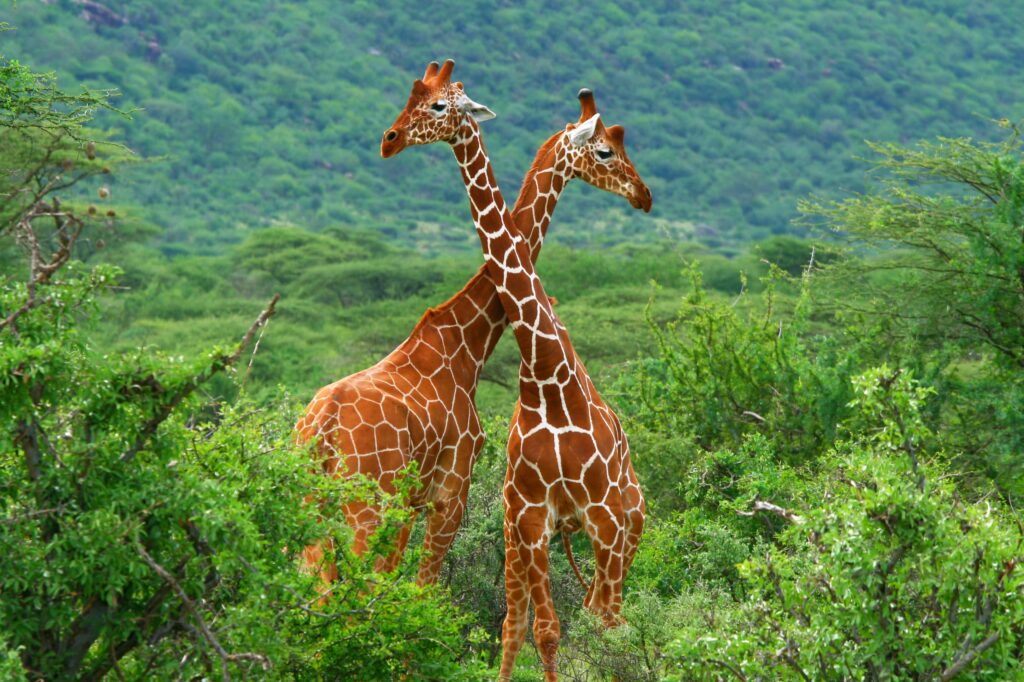
- Reticulated giraffe
WILDLIFE FOUND IN SAMBURU NATIONAL RESERVE
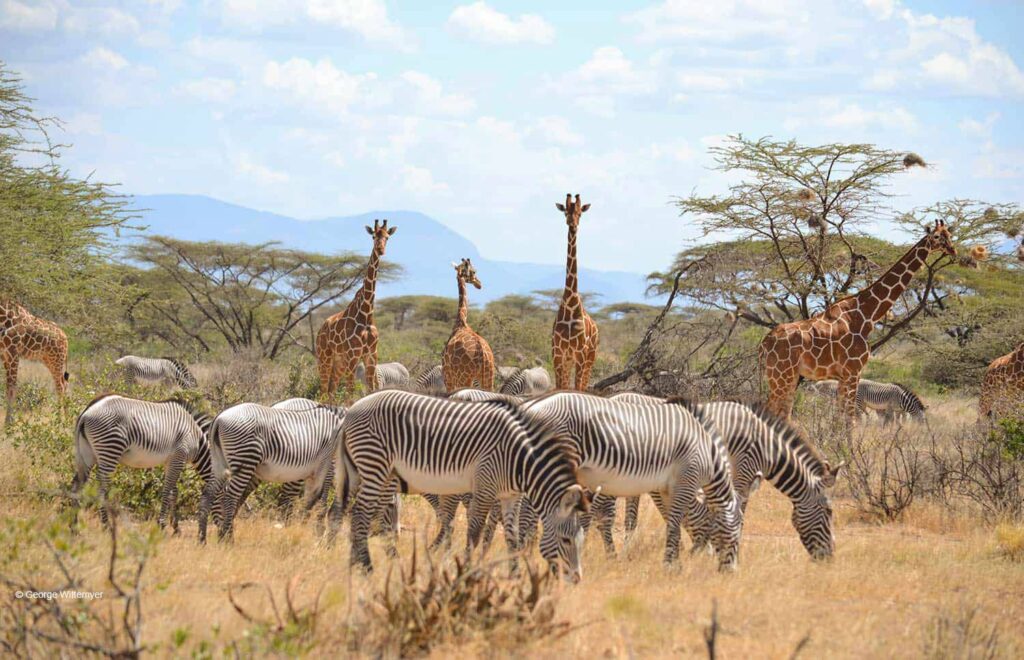
One of Samburu’s greatest attractions is its Samburu Special Five, species strongly associated with the northern Kenya ecosystem:
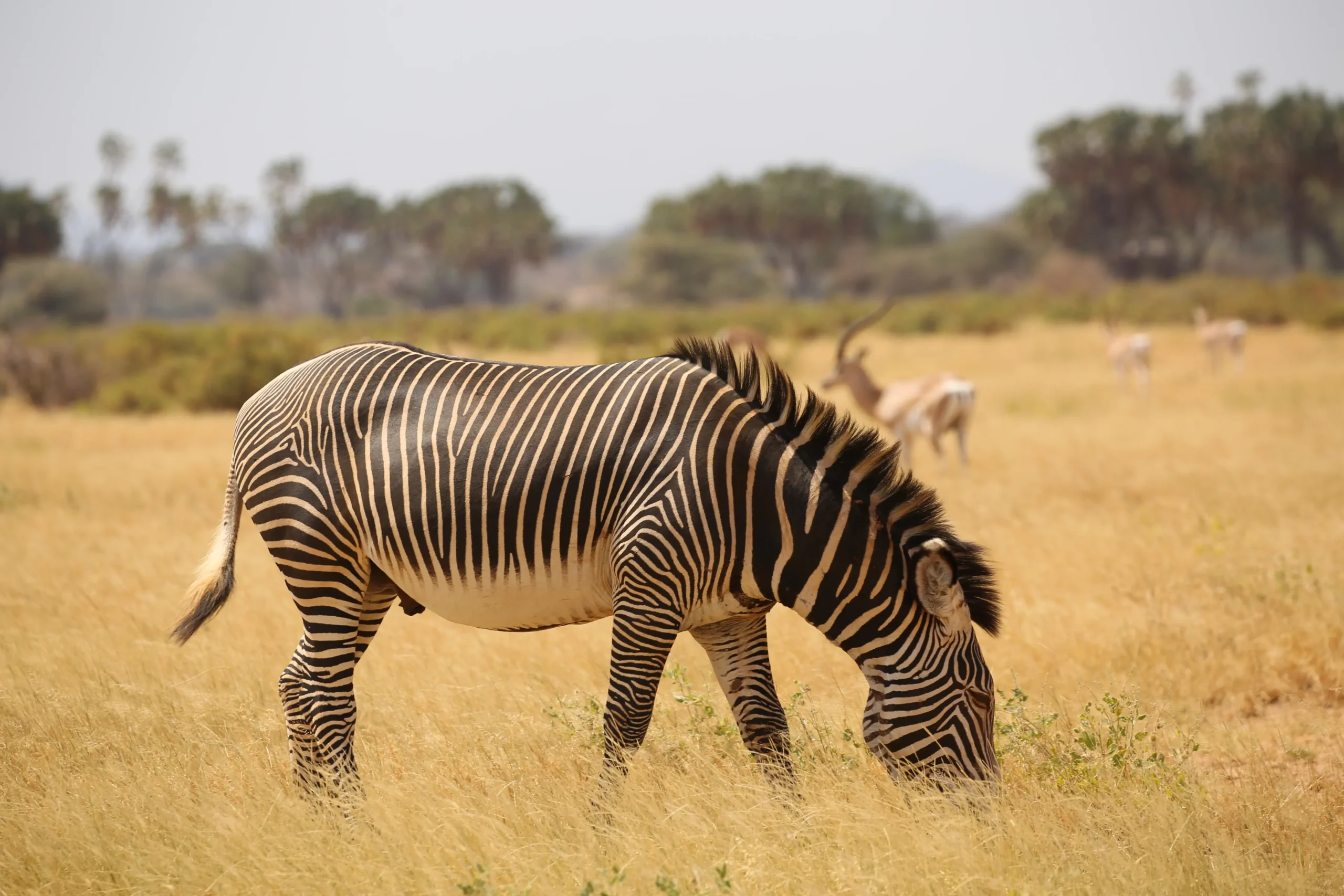
- Grevy’s zebra – distinguished by its narrow, closely spaced stripes.
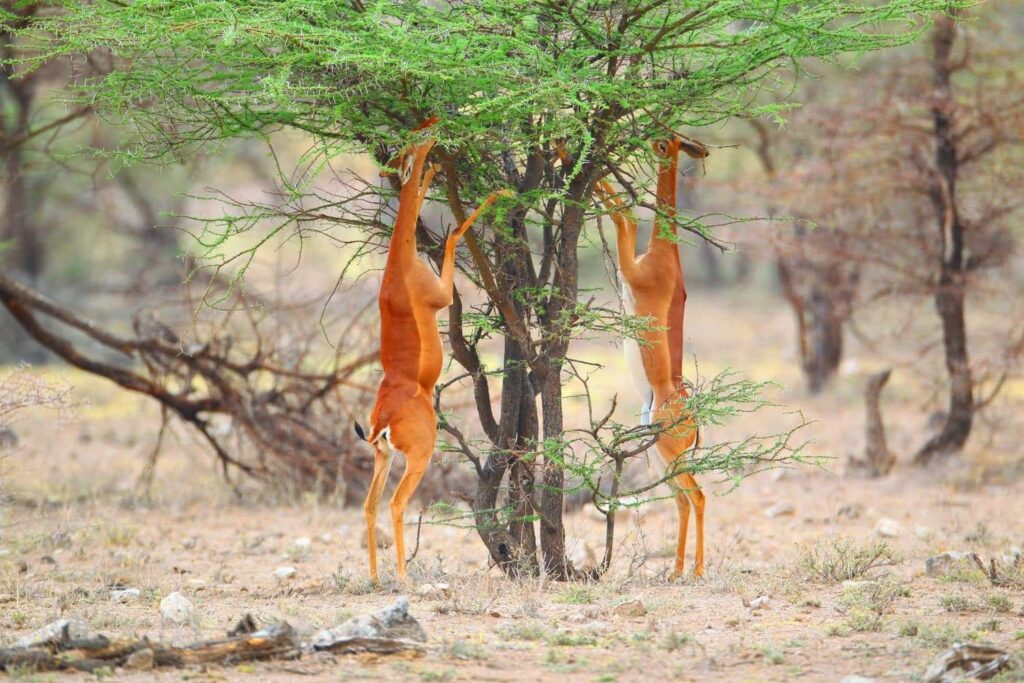
- Gerenuk – a long-necked antelope famous for standing on its hind legs to browse.
- Beisa oryx – a striking antelope adapted to dry environments.
- Somali ostrich – a large flightless bird characteristic of northern Kenya.
- Reticulated giraffe – recognized by its distinctive network-like coat pattern.
Other wildlife commonly encountered includes:
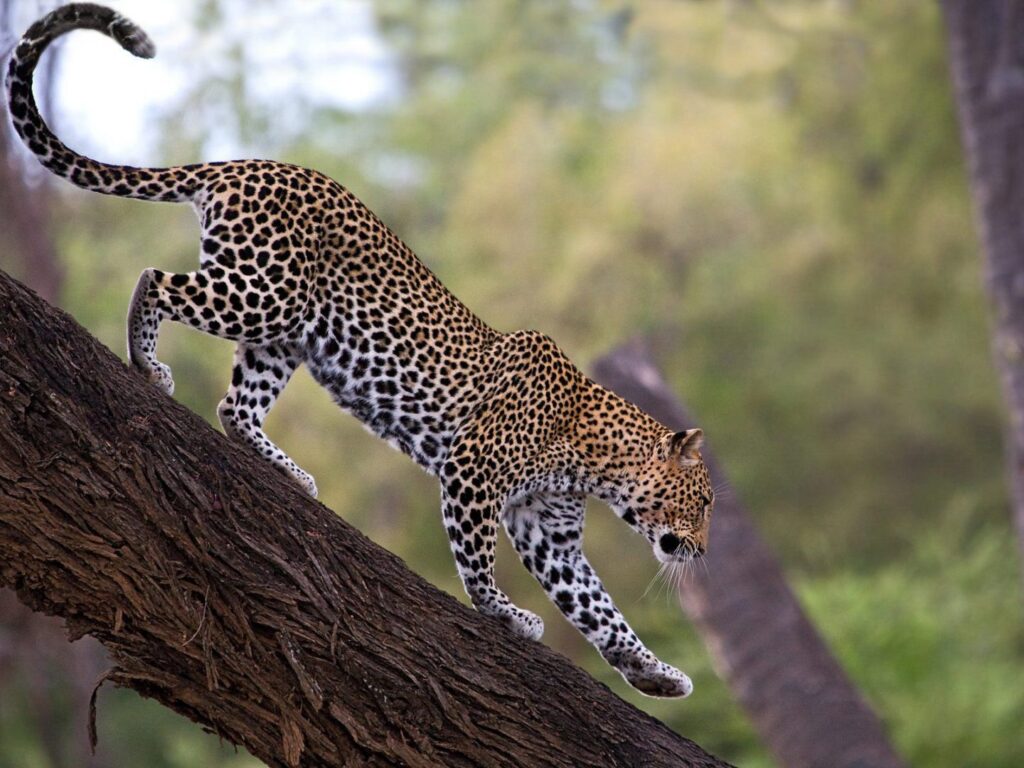
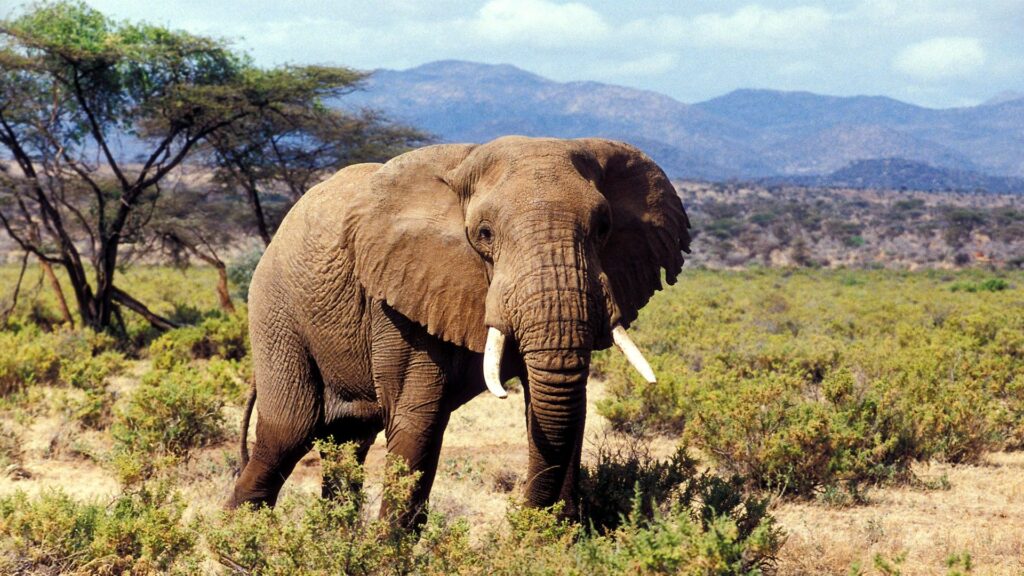
- African elephants, Lions, Leopards, Cheetahs, African buffaloes, Common zebras, Grant’s gazelles, Kirk’s dik-dik, Impala, Greater kudu, Waterbuck, Warthogs, Spotted hyenas, Jackals, Olive baboons, Velvet monkeys
Birdlife.
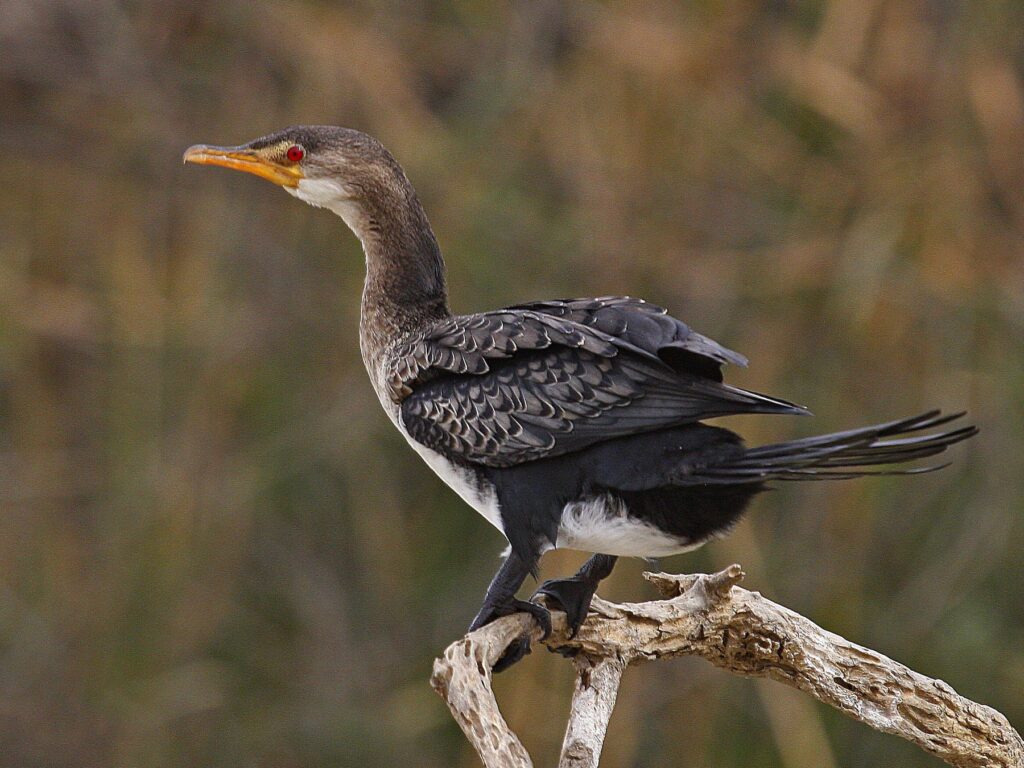
Samburu also an excellent destination for birdwatching, with a remarkable diversity of bird species, with the riverine forest, dry woodland, grassland and rocky habitats supporting a wide variety of bird species (More than 450 bird species).
Birds offered to encounter:
- Somali ostrich, Bateleur, African fish eagle, Tawny eagle, Martial eagle, Long-crested eagle, Various vultures, Secretary bird, Northern carmine bee-eater, White-throated bee-eater, Lilac-breasted roller, African grey hornbill, Eastern yellow-billed hornbill, Von der Decken’s hornbill, Superb starling, Common ostrich, Hadada ibis, Sacred ibis, Kingfishers, Weavers, Sunbirds and many more species.
MAJOR ATTRACTIONS & ACTIVITIES WITHIN SAMBURU NATIONAL RESERVE
The park offers a distinctive northern Kenya safari experience, combining wildlife viewing, birdwatching, scenic landscapes and cultural experiences along the Ewaso Ng’iro River.
ATTRACTIVE.
Samburu Special Five Viewing
One of the highlights is searching for the Samburu Special Five:
- Grevy’s zebra
- Reticulated giraffe
- Gerenuk
- Beisa oryx
- Somali ostrich
ACTIVITIES
Activities within the park.
- Game Drives
- Bird Watching
- Guided Nature Walks
- Samburu Special Five Viewing
- Wildlife & Landscape Photography
Activities outside the park.
- Conservancy Experiences
- Local Handicrafts & Beadwork
- Samburu Cultural Experiences
- Ewaso Ng’iro River Experiences
THE BEST TIME TO VISIT SAMBURU NATIONAL RESERVE
The park can be visited throughout the year, but Kenya Wildlife Service generally identifies June – December and December – March as favorable periods for wildlife viewing across Kenya, while April – May is the main long-rain period.
Best time according to Moth’s
June – October: Excellent for wildlife viewing
- Generally, one of the most rewarding periods for a classic Samburu safari. This is the drier part of the year, when vegetation becomes less dense and animals are often easier to spot across the open plains. As the dry season progresses, wildlife increasingly depends on the park’s permanent wetlands, marshes and other reliable water sources.
January–February: Warm and Dry
- The weather offers another favorable window for visiting Samburu. These months fall between the main rainy periods and can provide a good balance of wildlife viewing and green landscapes. There may still be water and vegetation in the wetlands, while the surrounding plains can remain relatively open for game viewing.
March–May: Long-rain season
- The long rains generally occur from March to May, transforming Samburu’s normally dry landscape into a much greener and more vibrant environment. Rainfall brings fresh vegetation, replenishes wetlands and creates dramatic seasonal scenery.
November – December: Best for green landscapes, birdlife and a quieter atmosphere
- Bring the shorter rains, which can gradually refresh the landscape after the dry season. The arrival of rain stimulates new vegetation growth, and the plains can become increasingly green.
The best time to experience Samburu National Reserve is throughout the year, as each season offers a unique safari experience.
DRIVE TIME TO SAMBURU NATIONAL RESERVE
- Nairobi to Samburu National Reserve: 5.5 hours
- Samburu to Buffalo Springs National Reserve: 40 Minutes
Typical route:
Nairobi → Thika → Nanyuki → Isiolo → Archer’s Post → Samburu National Reserve
RELATED SAFARI'S!
Watch hundreds of thousands of wildebeest, accompanied by zebras and other herbivores, cross vast savannahs in search of fresh grazing, braving dramatic river crossings and powerful predators including crocodiles along the way. Happened at the Northern part of Serengeti - Kogatende through Mara river.
Experience the magic of the Great Migration calving season in the Southern Serengeti, especially around the Ndutu Plains. From January to March, vast herds of wildebeest gather on the green plains, with thousands of newborn calves taking their first steps. Witness incredible scenes of birth, survival, and predator action.
Experience the ultimate Tanzania adventure combining the breathtaking Great Migration Safari with the tropical beauty of Zanzibar. Witness vast herds of wildebeest and zebras across the Serengeti, then unwind on Zanzibar’s pristine beaches with crystal-clear waters, island excursions, snorkeling, and unforgettable sunsets.
Get In Touch
Its never too soon or too late to get in touch, we are always eager to help out