 info@mupanatours.com Blog
 +255714055829
DISCOVER TSAVO EAST NATIONAL PARK
Encounter enormous elephant herds, ancient baobab trees, including other animal species and spectacular seasonal landscapes. Explore the park’s open savannahs, woodlands and seasonal wetlands, where animals and hundreds of bird species thrive.
TSAVO EAST NATIONAL PARK!
THE BEST OF TSAVO EAST NATIONAL PARK
TSAVO EAST NATIONAL PARK
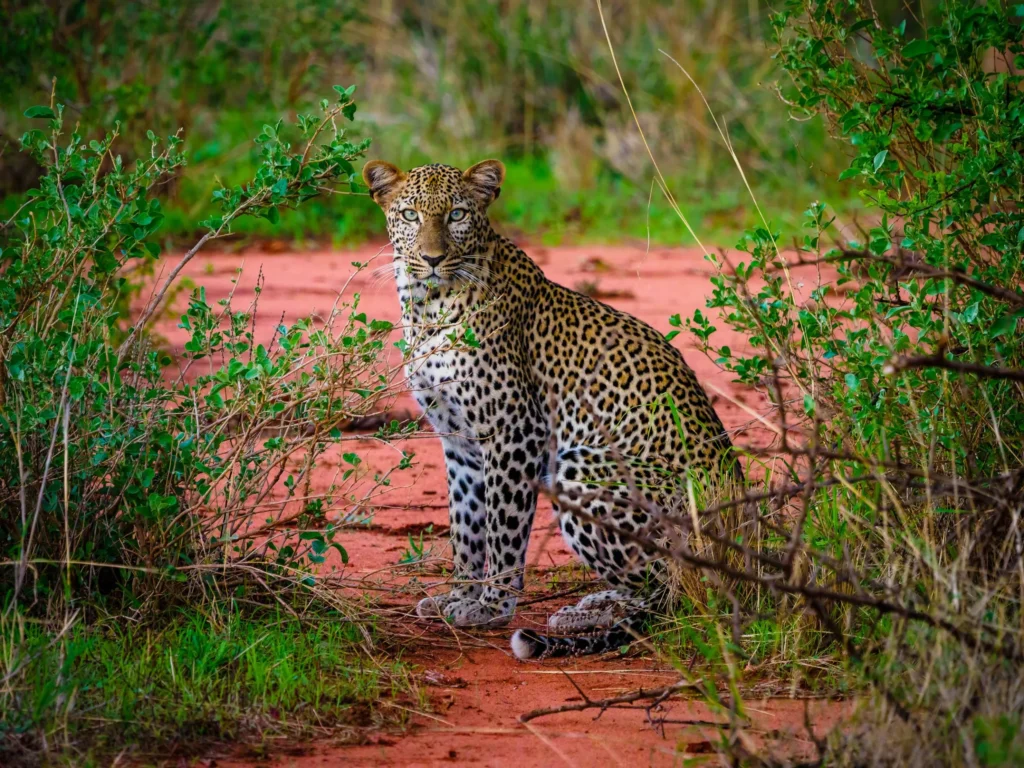
Tsavo East is one of Kenya’s most iconic wilderness destinations and the largest national park in Kenya, covering approximately 13,747 km². It lies in southeastern Kenya, mainly within Taita-Taveta County, with the wider park ecosystem extending across neighboring areas. It forms part of the vast Tsavo Conservation Area, together with Tsavo West National Park and other surrounding protected landscapes.
The park situated between Nairobi and Mombasa, making it an important safari destination for travelers combining a wildlife experience with Kenya’s coastal resorts. The park is crossed by the Tsavo and Athi Rivers, which provide important water sources for wildlife and vegetation in its predominantly semi-arid environment. The landscape features vast open plains, acacia bushland, riverine vegetation and volcanic terrain.
The park can be accessed from several gates, including Voi Gate, Bachuma Gate, Manyani Gate, Mtito Andei Gate and Sala Gate. Voi is an important gateway for visitors traveling from the Mombasa direction.
Tsavo East covers approximately 13,747 square kilometres (5,308 square miles), making it Kenya’s largest national park. Together with Tsavo West, the two parks form the core of the enormous Tsavo Conservation Area, which covers roughly 22,000 km². One of its most distinctive geographical features is the Yatta Plateau, described by Kenya Wildlife Service as the world’s longest lava flow. The Galana River also runs through the park, creating a vital corridor of water and vegetation across the dry landscape. Conservation efforts subsequently focused on strengthening wildlife protection, combating poaching and restoring populations of threatened species. Today, Tsavo East remains an important part of Kenya’s national conservation network.
WILDLIFE FOUND IN TSAVO EAST NATIONAL PARK
The park renowned for its vast wilderness, iconic dust-red elephants, diverse large mammals and exceptional birdlife. Kenya Wildlife Service records more than 500 bird species, including resident and migratory birds.
Wildlife commonly encountered includes:
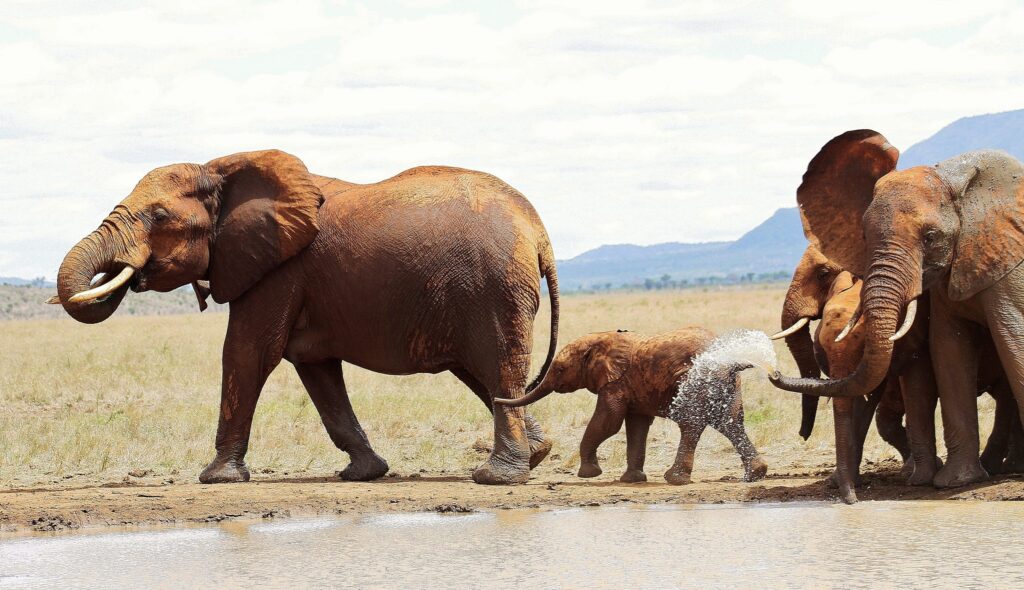
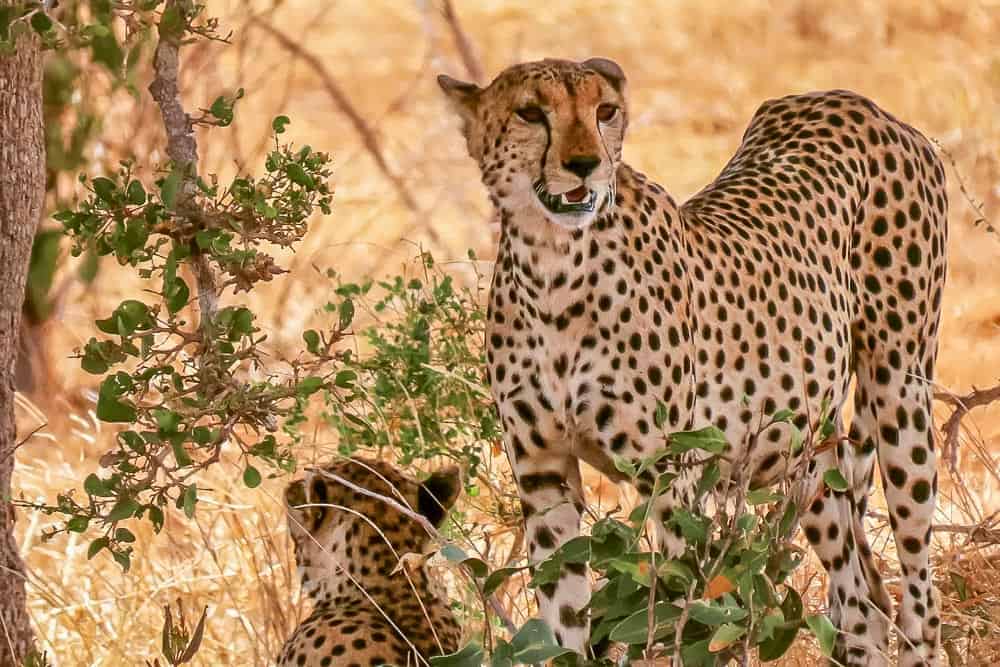
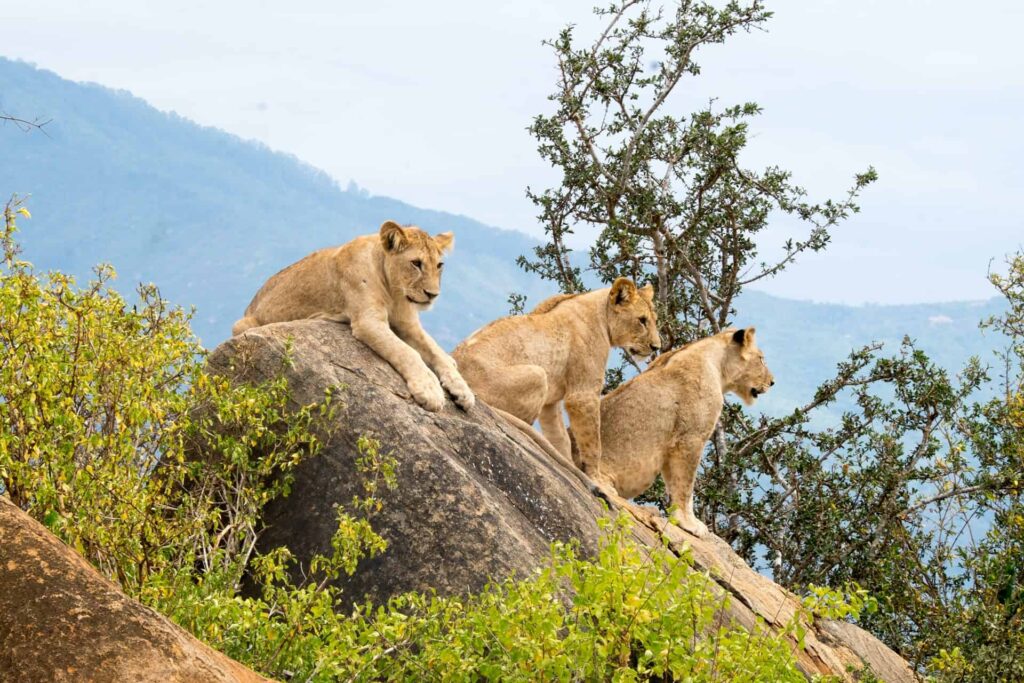
- Lions, Leopards, Black rhinoceroses, Cape buffaloes, Hippopotamuses, Giraffes, Zebras, Waterbucks, Gerenuks, Lesser kudus, Elands, Warthogs, Crocodiles, Hirola (Hunter’s hartebeest) and African elephants – particularly famous for their reddish appearance from bathing and dusting in Tsavo’s red soil including other many species.
The Elephant Experience
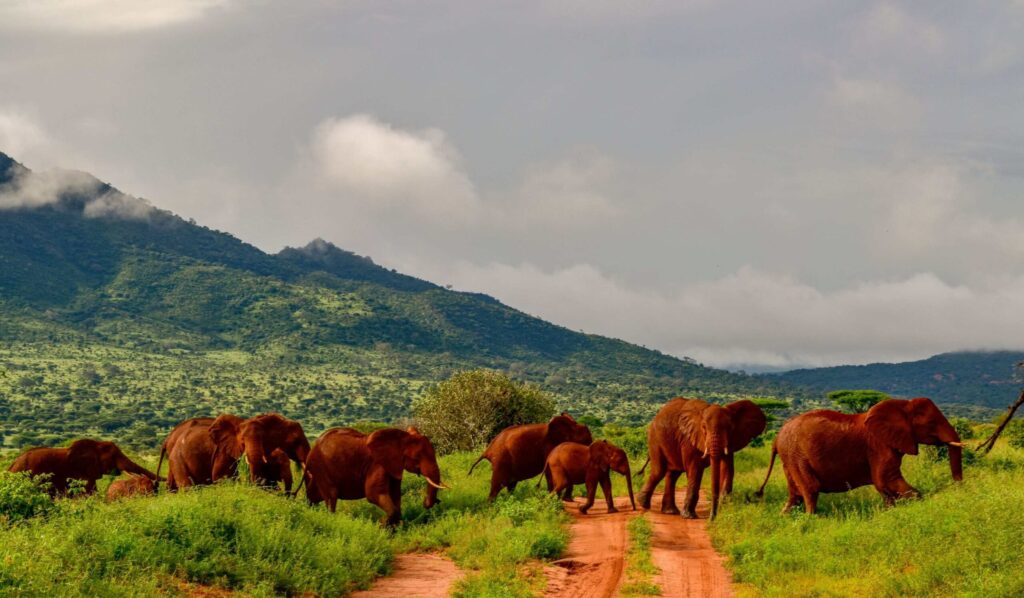
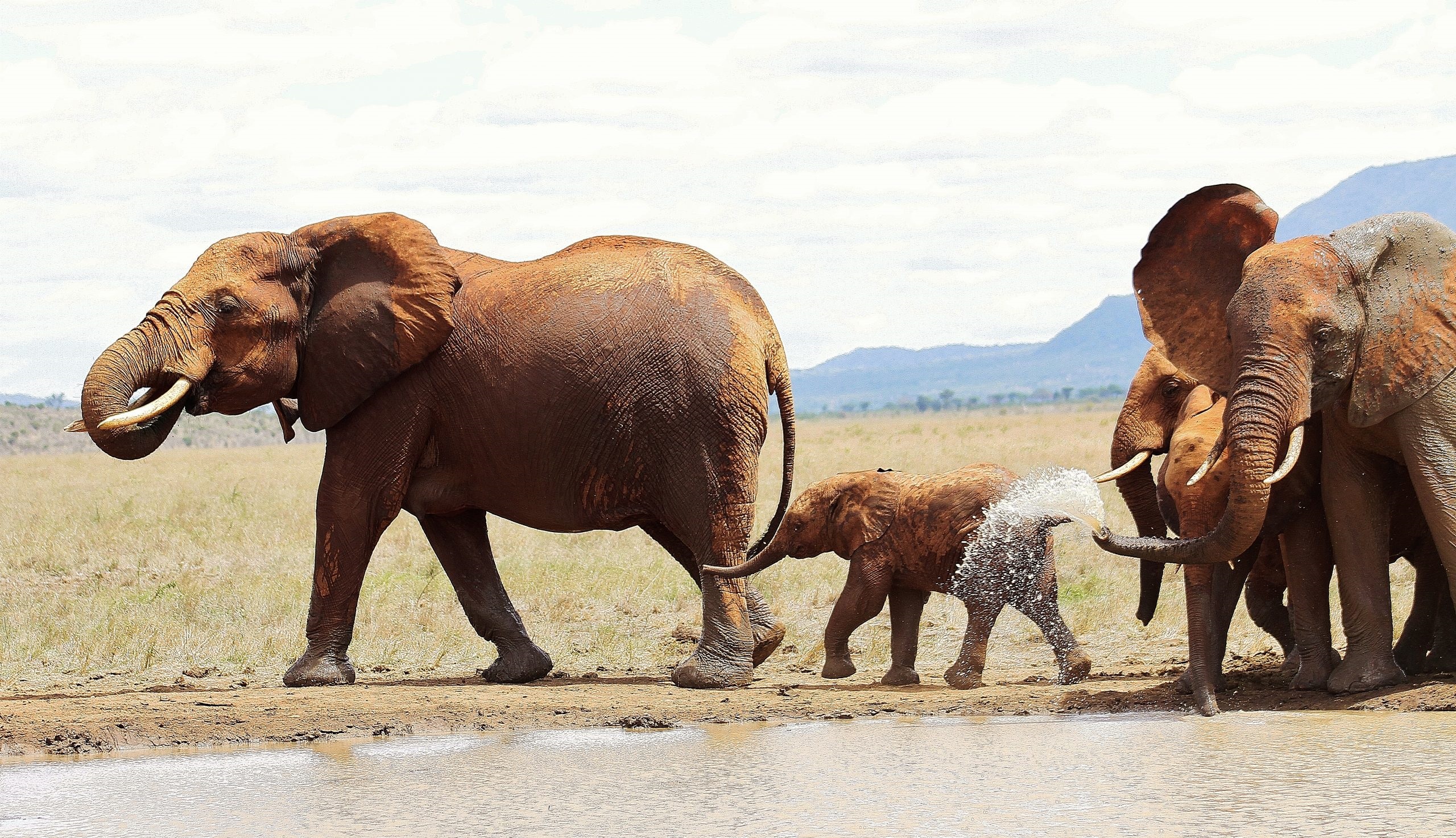
Elephants are one of the most important symbols and attractions of Tsavo East National Park. The park is especially famous for its large herds of dust-red elephants, which acquire their distinctive color by coating themselves with the park’s rich red soil. Beyond their tourism value, elephants play a vital ecological role by shaping vegetation, opening pathways through dense woodland, dispersing seeds and creating habitats used by other wildlife.
Birdlife
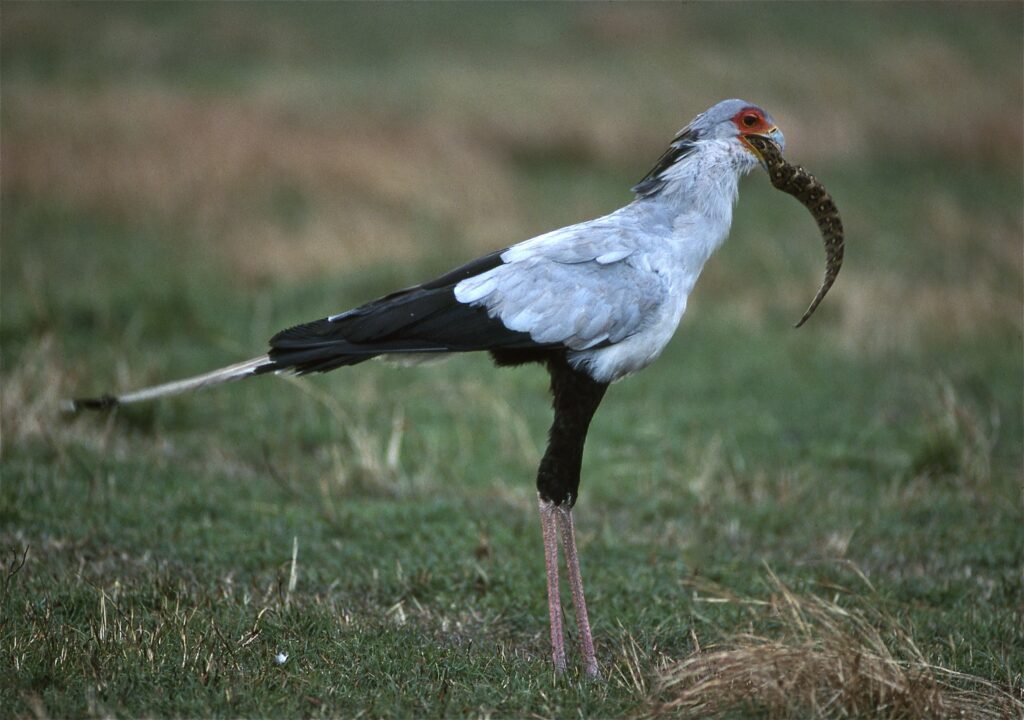
Tsavo East National Park is also an excellent destination for birdwatching, with a remarkable diversity of bird species (More than 500 bird species ).
Tsavo East’s extensive birdlife includes:
- Somali Ostrich, Vulturine Guineafowl, Golden-breasted Starling, Fischer’s Starling, Kori Bustard, Secretary bird, Martial Eagle, Bateleur, African Fish Eagle, Lappet-faced Vulture, Palm-nut Vulture, Saddle-billed Stork, African Finfoot, Von der Decken’s Hornbill, Eastern Yellow-billed Hornbill, Lilac-breasted Roller, Carmine Bee-eater, White-throated Bee-eater, Woodland Kingfisher, Golden Pipit, Rosy-patched Bush shrike and Southern Ground Hornbill including other more bird species.
Migratory birds are particularly noticeable from approximately November to April, adding to the park’s already impressive resident birdlife.
MAJOR ATTRACTIONS & ACTIVITIES WITHIN TSAVO EAST NATIONAL PARK
ATTRACTION
Dust – Red Elephant
Tsavo East is world-famous for its large herds of red elephants, which coat themselves with the park’s distinctive red soil.
Activities within the park.
- Game Drives
- Birdwatching
- Elephant Watching
- Wildlife & Nature Photography
Activities outside the park.
- Hiking & Nature Walks
- Taita Cultural Experiences
- Rhino & Wildlife Conservation
Beyond Tsavo East National Park, travelers can discover the cultural, natural and historical treasures of the wider Tsavo ecosystem.
THE BEST TIME TO VISIT TSAVO EAST NATIONAL PARK
Tsavo East National Park can be visited throughout the year, but the experience changes considerably with the seasons. Because Tsavo is a semi-arid park with numerous rivers, streams, wetlands and riverine habitats, rainfall has a strong influence on vegetation, road conditions and wildlife distribution. Kenya Wildlife Service describes Kenya’s parks as year-round destinations, while identifying July – December and December – March generally as favorable periods for wildlife viewing; April – May is the principal long-rain period.
Best time according to Moth’s
June – October: Excellent for wildlife viewing
- Generally, one of the most rewarding periods for a classic Tsavo East park safari. This is the drier part of the year, when vegetation becomes less dense and animals are often easier to spot across the open plains. As the dry season progresses, wildlife increasingly depends on the park’s permanent wetlands, marshes and other reliable water sources.
January–February: Warm and Dry
- The weather offers another favorable window for visiting Tsavo National Park. These months fall between the main rainy periods and can provide a good balance of wildlife viewing and green landscapes. There may still be water and vegetation in the wetlands, while the surrounding plains can remain relatively open for game viewing.
March–May: Long-rain season
- The long rains generally occur from March to May, transforming Tsavo normally dry landscape into a much greener and more vibrant environment. Rainfall brings fresh vegetation, replenishes wetlands and creates dramatic seasonal scenery.
November – December: Best for green landscapes, birdlife and a quieter atmosphere
- Bring the shorter rains, which can gradually refresh the landscape after the dry season. The arrival of rain stimulates new vegetation growth, and the plains can become increasingly green.
The best time to experience Tsavo East National Park is throughout the year, as each season offers a unique safari experience.

DRIVE TIME TO TSAVO EAST NATIONAL PARK
- Nairobi to Tsavo East National Park: 5 hours
- Tsavo East to Tsavo West National Park: 2 hours
Typical Route: Nairobi → Tsavo East National Park
Nairobi → Athi River → Sultan Hamud → Kibwezi → Mtito Andei → Voi → Tsavo East National Park
RELATED SAFARI'S!
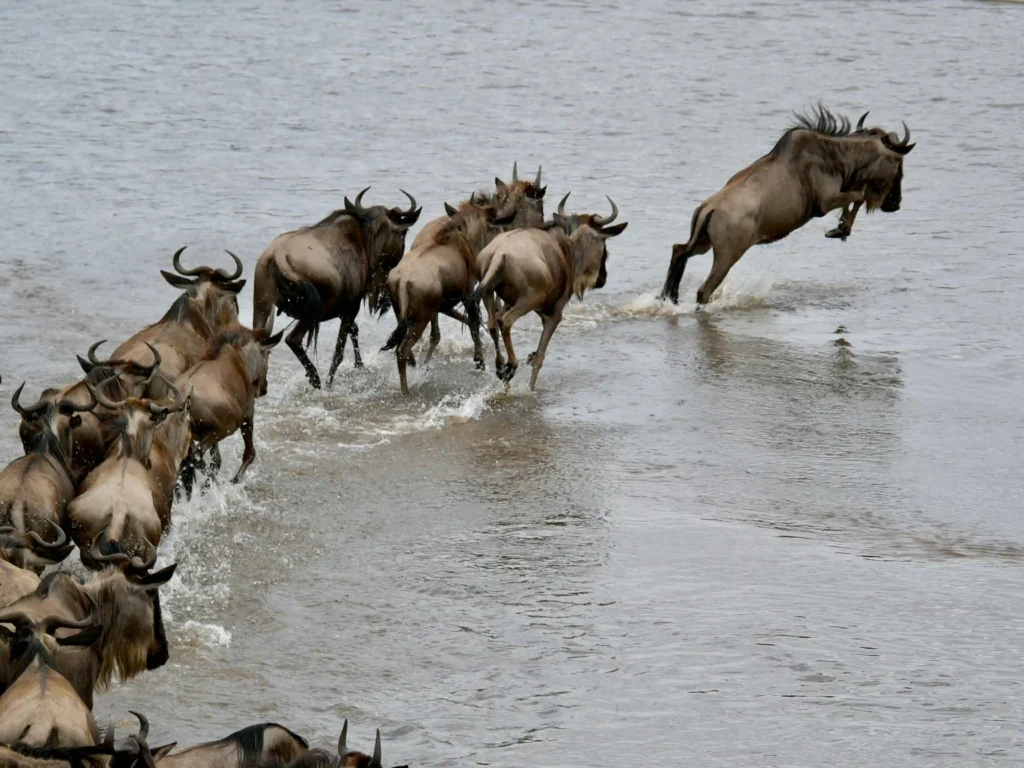
Watch hundreds of thousands of wildebeest, accompanied by zebras and other herbivores, cross vast savannahs in search of fresh grazing, braving dramatic river crossings and powerful predators including crocodiles along the way. Happened at the Northern part of Serengeti - Kogatende through Mara river.
Experience the magic of the Great Migration calving season in the Southern Serengeti, especially around the Ndutu Plains. From January to March, vast herds of wildebeest gather on the green plains, with thousands of newborn calves taking their first steps. Witness incredible scenes of birth, survival, and predator action.
Experience the ultimate Tanzania adventure combining the breathtaking Great Migration Safari with the tropical beauty of Zanzibar. Witness vast herds of wildebeest and zebras across the Serengeti, then unwind on Zanzibar’s pristine beaches with crystal-clear waters, island excursions, snorkeling, and unforgettable sunsets.
Get In Touch
Its never too soon or too late to get in touch, we are always eager to help out