 info@mupanatours.com Blog
 +255714055829
DISCOVER SERENGETI NATIONAL PARK
Experience the Great Migration across two spectacular seasons – the dramatic river-crossing season in Northern Serengeti, where wildebeest face crocodile-filled rivers, and the calving season in Southern Serengeti, when thousands of newborns take their first steps!
GREAT MIGRATION SEASON - RIVER CROSSING!
NORTHERN SERENGETI GREAT MIGRATION
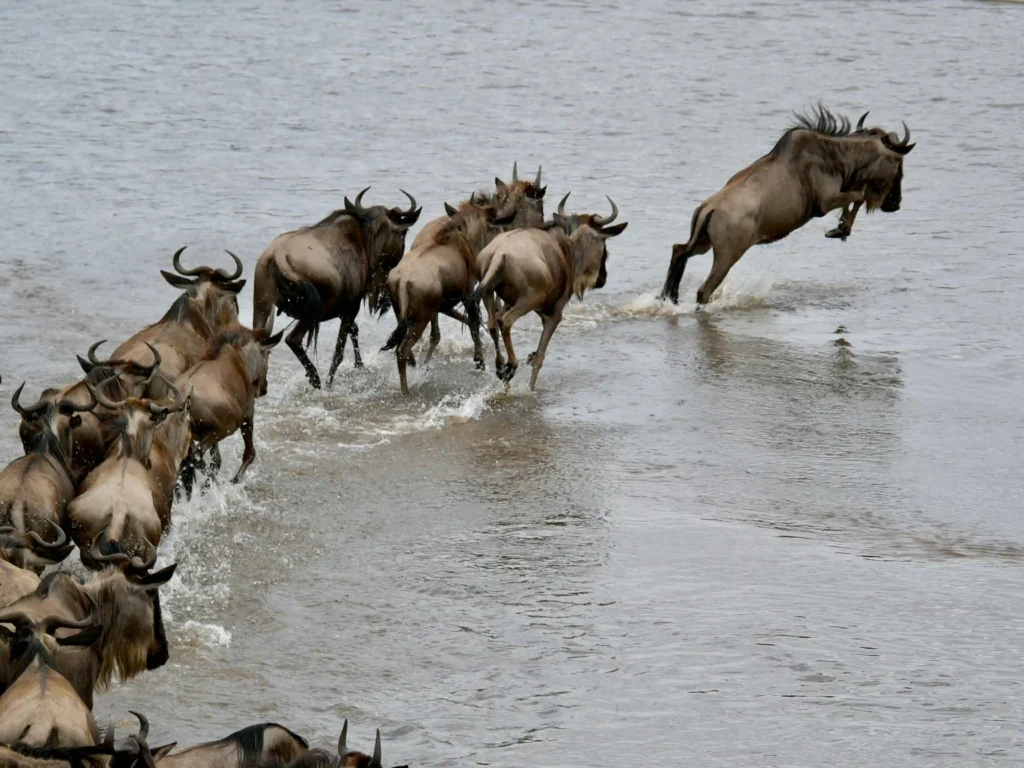
GREAT MIGRATION – RIVER CROSSING
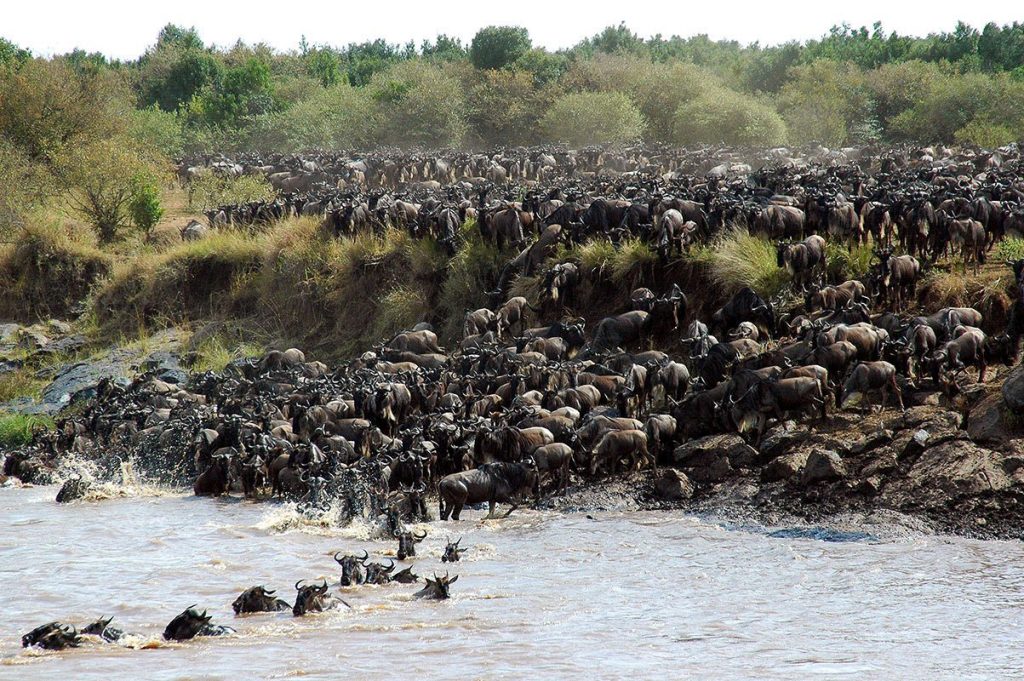
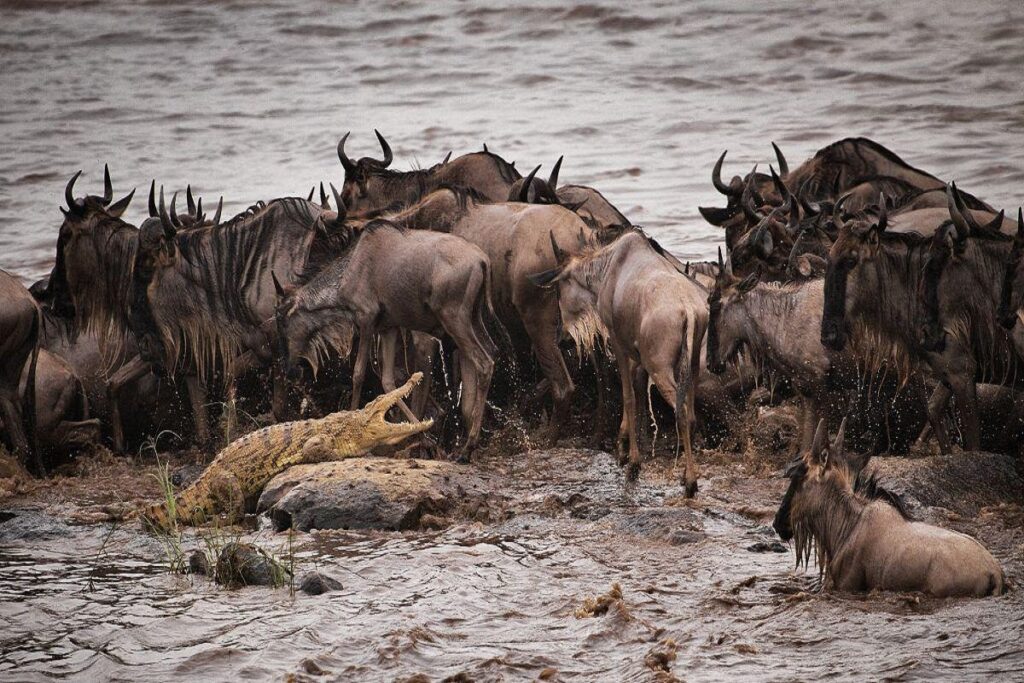
The Great Migration river crossing in Northern Serengeti is one of Africa’s most extraordinary wildlife spectacles. During the migration, hundreds of thousands of wildebeest, accompanied by zebras and other herbivores, move northward through the Serengeti in search of fresh grass and water. As the herds reach the Mara River, they may gather along the riverbanks for hours or a days before one animal finally takes the first courageous step into the water. The migration occurs throughout the year, but the famous Mara River crossings are mainly associated with July–October.
Once the crossing begins, the scene can become incredibly dramatic. Thousands of animals rush down steep, dusty banks and plunge into the river, creating a powerful surge of hooves, splashing water, dust, and movement. The animals must navigate strong currents, slippery rocks, deep water, and steep riverbanks, while Nile crocodiles wait in the river for opportunities to strike. Some animals successfully reach the opposite bank, while others are swept away by the current or separated from the herd.
The crossing is also a powerful reminder of the struggle for survival that drives the Great Migration. There is no guaranteed schedule, the timing and location depend on rainfall, water levels, grazing conditions, and the movement of the herds. This unpredictability makes every crossing unique and creates an authentic wilderness experience.
From a safari vehicle positioned near the river, the possible angle for all to witness the anticipation, the sudden rush of the herd, and the dramatic struggle to reach the opposite bank. Northern Serengeti offers one of the best settings to experience this remarkable chapter of the annual Great Migration.
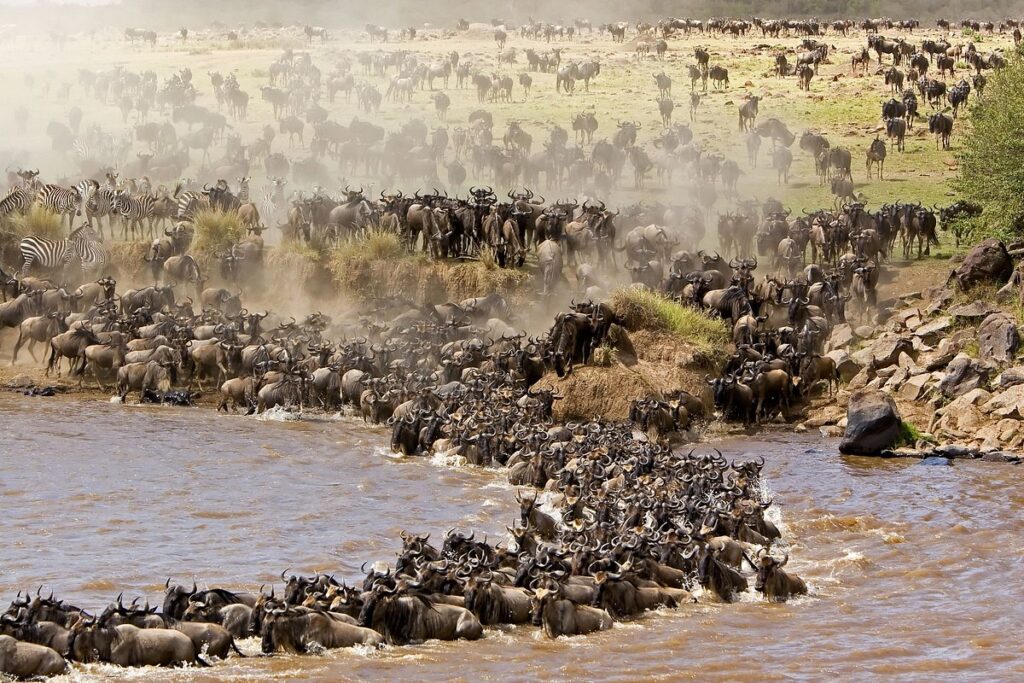
WHERE DOES RIVER CROSSING OCURS?
The main crossing areas are in the far Northern Serengeti, particularly around:
- Kogatende: an area in the Northern Serengeti, famous for the Mara River and one of the key locations for witnessing the Great Migration river crossings.
- Mara River: one of the most important natural landmarks along the Great Migration route. It flows through the Northern Serengeti in Tanzania and continues into Kenya’s Maasai Mara, creating one of the most dramatic settings for the annual wildebeest migration
- Lamai Wedge: a spectacular area in the Northern Serengeti, located near the Mara River and close to the Tanzania–Kenya border. It is particularly well known for its beautiful rocky landscapes, abundant wildlife, and its importance during the Great Migration.
The river forms part of the Tanzania–Kenya migration route, with herds moving between the Northern Serengeti and Kenya’s Maasai Mara. Tanzania National Parks has designated specific crossing points and viewing areas to protect the animals and the ecosystem.
WHEN DOES THE MIGRATION OCURS?
Best overall period: July–October
Best months for Mara River crossings: August–September
The migration generally reaches the Northern Serengeti from around July and remains active through October, with the most famous activity centered around the Mara River, Kogatende, and Lamai Wedge.
The herds move northward from the central Serengeti, following the availability of fresh grass and water. Eventually, they encounter the Mara River, where they may gather in enormous numbers before attempting to cross into Kenya’s Maasai Mara.
Best time: August & September
August and September are generally considered the prime months for a Northern Serengeti Great Migration safari, particularly if your main goal is to have a chance of witnessing the dramatic Mara River crossings.
During these months:
- Large concentrations of wildebeest and zebras can be found in the north.
- Herds may gather along the Mara River before crossing.
- Multiple crossing attempts can occur throughout the season.
- Predators such as lions, leopards, and cheetahs take advantage of the concentration of prey.
- Crocodiles and hippos are commonly encountered around the river.
- The Northern Serengeti landscape is particularly spectacular for photography and game viewing.
JULY – THE BEGINNING OF THE NORTHERN SEASON ⭐⭐⭐
July can be an excellent time to visit as the first major herds begin arriving in Northern Serengeti. Some groups may already be close to the Mara River, while others are still moving north. River crossings can happen in July, but they are not guaranteed. The timing depends heavily on rainfall and herd movement.
AUGUST – PEAK MIGRATION EXCITEMENT ⭐⭐⭐⭐⭐
August is one of the most sought-after months for the Northern Serengeti.
Huge herds can gather around Kogatende and the Mara River. The sight of thousands of wildebeest waiting on the riverbank before suddenly plunging into the water is one of Africa’s most unforgettable wildlife experiences. However, the river crossing is unpredictable. A herd may arrive at the river and remain there for hours or days before crossing.
SEPTEMBER – EXCELLENT CHANCE FOR CROSSINGS ⭐⭐⭐⭐⭐
September will continue to offer outstanding migration viewing. Large herds may still be concentrated around the Mara River and Lamai Wedge, with animals moving between Tanzania and Kenya. For travelers who want a strong chance of seeing the migration while avoiding some of the busiest periods associated with peak season, September can be an excellent choice.
OCTOBER – THE MIGRATION BEGINS MOVING SOUTH ⭐⭐⭐
October, changing rainfall patterns begin influencing the herds’ movements. Some animals may still be in Northern Serengeti, and river crossings can still occur, but increasingly the herds begin moving toward the central and southern Serengeti.
This makes October more unpredictable but potentially rewarding for travelers who prefer a quieter safari period.
GREAT MIGRATION - CALVING SEASON!
SOUTHERN SERENGETI GREAT MIGRATION
GREAT MIGRATION – CALVING SEASON
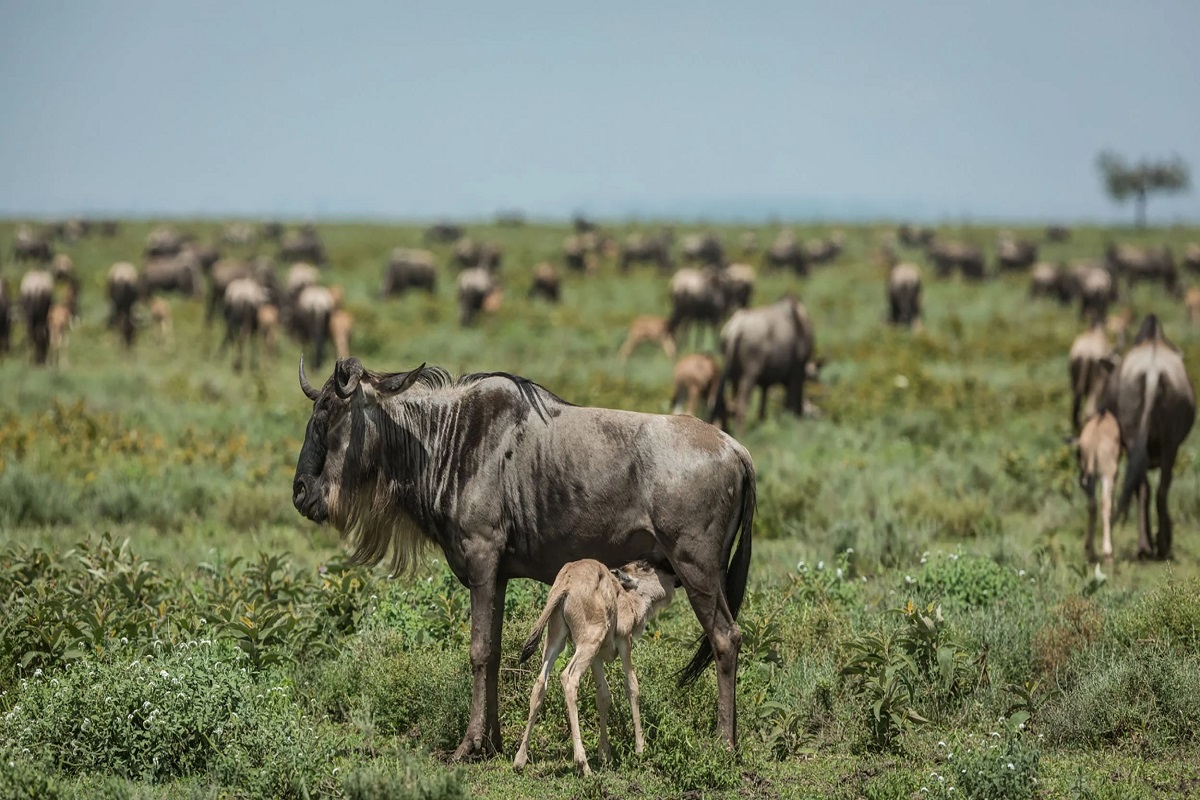
The Serengeti calving season is one of the most remarkable stages of the Great Migration. Every year, enormous herds of wildebeest move into the southern Serengeti and Ndutu plains, where females give birth to hundreds of thousands of calves during a relatively short period.
It is a season of new life, spectacular wildlife concentrations, and intense predator activity, making it one of the best times of year for a wildlife-focused safari. Tanzania’s national-park authority describes the calving period as occurring from January to March, with the southern Serengeti and Ndutu area becoming the heart of the event.
Experience the Serengeti Calving Season in the Southern Plains, where hundreds of thousands of wildebeest gather to give birth against a breathtaking backdrop of green grasslands. Visit during January to March, with February offering the peak of the action, and witness newborn calves taking their first steps while lions, cheetahs and hyenas follow the herds. It is a powerful celebration of life, survival and the untamed beauty of Tanzania.
WHERE DOES THE CALVING SEASON OCCURS?
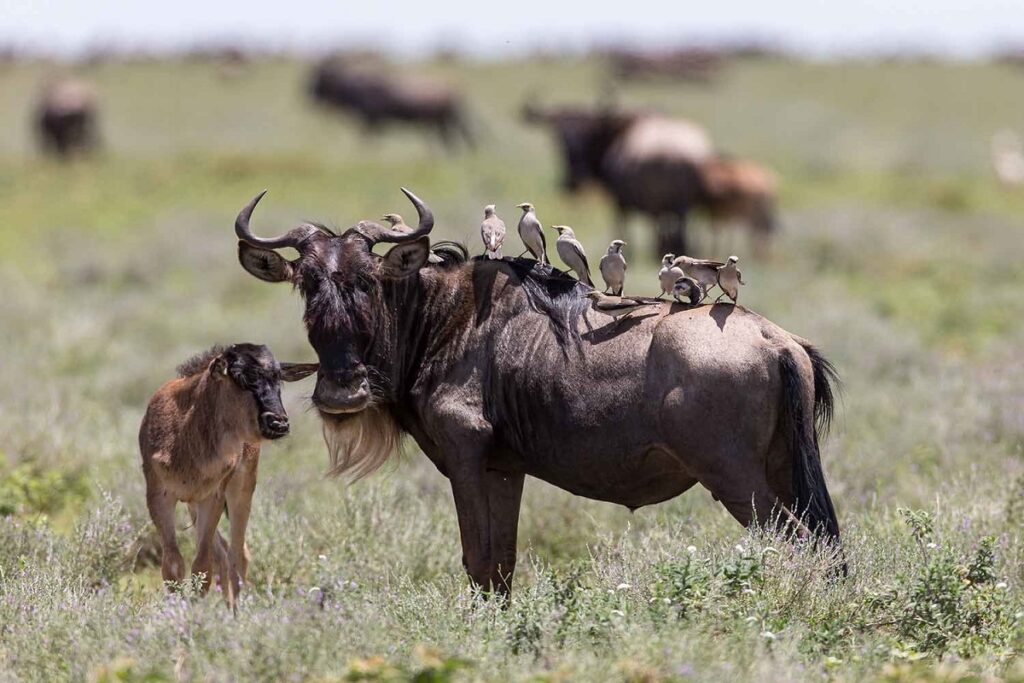
The main calving grounds are in the Southern Serengeti, particularly the open short-grass plains around Ndutu.
The Ndutu area lies around the southern edge of the Serengeti ecosystem and the Ngorongoro Conservation Area, with the migration moving across these natural landscapes regardless of administrative boundaries. The short grass and nutrient-rich soils provide excellent grazing for pregnant wildebeest and suitable habitat for newborn calves.
Important areas include:
- Ndutu Plains: among the most important wildlife areas in the Southern Serengeti, famous for the spectacular Great Migration calving season. These vast, open grasslands provide ideal conditions for large herds of wildebeest and zebras, particularly when the seasonal rains transform the plains into a rich green grazing area.
- Southern Serengeti: one of Tanzania’s most important wildlife regions and the heart of the Great Migration calving season. Its vast open grasslands, particularly around Ndutu, become a natural nursery between approximately January and March, when enormous herds of wildebeest gather to give birth.
- Lake Masek: a seasonal lake located in the Ndutu area of the Southern Serengeti ecosystem, close to the Ngorongoro Conservation Area. Together with the surrounding grasslands and woodland, it forms an important habitat for wildlife, especially during the Great Migration calving season.
- Lake Ndutu: a seasonal soda lake located in the Ndutu area of the southern Serengeti ecosystem, near the boundary with the Ngorongoro Conservation Area. Surrounded by open plains and acacia woodland, it forms an important part of the landscape used by wildlife during the Great Migration calving season
- Gol Mountains and surrounding plains: a spectacular and relatively remote landscape within the wider Southern Serengeti–Ngorongoro ecosystem. The area is characterized by rugged rocky hills, open grasslands, seasonal water sources and expansive wilderness, creating an important habitat for both resident and migratory wildlife.
- Southern parts of the Serengeti ecosystem toward the Ngorongoro Conservation Area
This region becomes an enormous natural nursery, with wildebeest, zebra and gazelle gathering across the plains.
WHEN DOES THE CALVING SEASON OCCURS?
Best overall period: January–March
Best month: February
The general calving season runs from January through March, although the exact timing changes according to rainfall and the availability of fresh grass.
DECEMBER – ARRIVAL AND PREPARATION
Following the November rains, the herds begin concentrating in the southern Serengeti and surrounding Ndutu area. Pregnant females feed heavily on the fresh, nutritious grass in preparation for giving birth.
JANUARY – CALVING BEGINS ⭐⭐⭐⭐
By January, calving activity starts increasing. You can see large concentrations of pregnant females, newborn calves and herds spread across the green plains.
January can be an excellent time for travelers who want to experience the beginning of the calving season while potentially encountering fewer visitors than during the February peak.
FEBRUARY – PEAK CALVING SEASON ⭐⭐⭐⭐⭐
February is generally the best month for the calving experience.
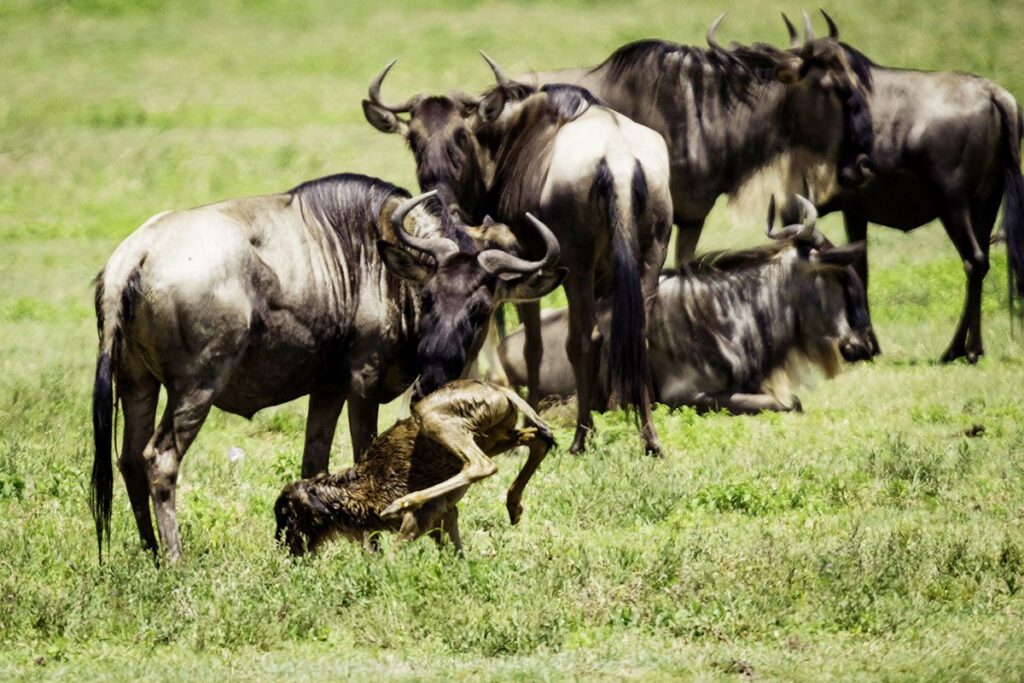
This is when the birth of wildebeest calves reaches its greatest concentration. Tanzania’s tourism information notes that around mid-February, thousands of wildebeest calves can be born each day for several weeks.
MARCH – LATE CALVING AND MOVEMENT NORTH ⭐⭐⭐⭐
Calving can continue into March, although the intensity gradually decreases. The young calves become stronger and the herds begin preparing for their next major movement toward the central Serengeti. March can therefore offer a combination of young calves, predators and migrating herds, although the peak birthing concentration is usually earlier.
OUR POPULAR GREAT MIGRATION PACKAGES!
Watch hundreds of thousands of wildebeest, accompanied by zebras and other herbivores, cross vast savannahs in search of fresh grazing, braving dramatic river crossings and powerful predators including crocodiles along the way. Happened at the Northern part of Serengeti - Kogatende through Mara river.
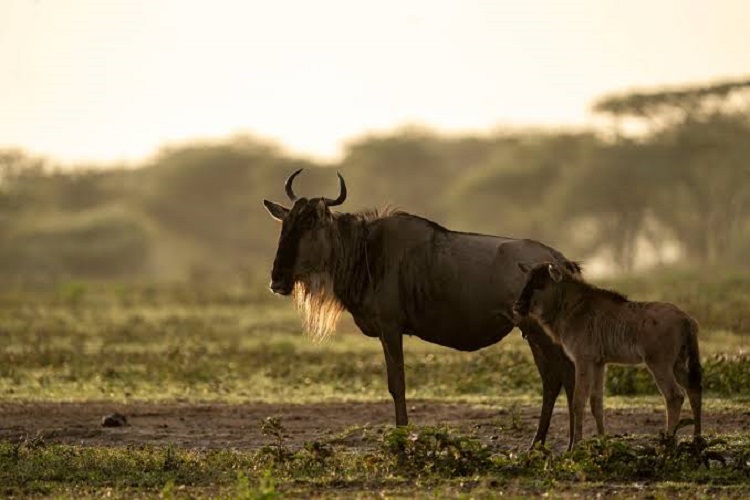
Experience the magic of the Great Migration calving season in the Southern Serengeti, especially around the Ndutu Plains. From January to March, vast herds of wildebeest gather on the green plains, with thousands of newborn calves taking their first steps. Witness incredible scenes of birth, survival, and predator action.
Experience the ultimate Tanzania adventure combining the breathtaking Great Migration Safari with the tropical beauty of Zanzibar. Witness vast herds of wildebeest and zebras across the Serengeti, then unwind on Zanzibar’s pristine beaches with crystal-clear waters, island excursions, snorkeling, and unforgettable sunsets.
Get In Touch
Its never too soon or too late to get in touch, we are always eager to help out